
Wisconsin’s Truth in Sentencing Law Is Failing — And the Data Proves It
When Wisconsin eliminated parole for felony offenses in 1999, lawmakers promised accountability and public safety. More than 25 years later, the results are in — and they are damning. A landmark new report, Cross Examination: A Comprehensive Review of Wisconsin’s Criminal Justice System, released by the respected Wisconsin Policy Forum in April 2026 lays out the wreckage in detail: prisons bursting at the seams, costs that have spiraled out of control, racial disparities that have deepened, and thousands of people sitting in cells with no incentive to rehabilitate and no path to early release. Wisconsin’s truth-in-sentencing law didn’t just fail to fix the criminal justice system. In many ways, it made things worse.
A Law Built to Punish, Not Rehabilitate
Passed as 1997 Wisconsin Act 283, the so-called truth-in-sentencing (TIS) law replaced flexible, parole-eligible sentences with rigid, fixed prison terms. People sentenced to prison must serve every single day of their sentence regardless of behavior, growth, or changed circumstances. Good conduct earns nothing. Participation in education or job training programs changes nothing. Wisconsin judges were trained to tell people before them “there is no good-time, only bad-time.” Legal scholars called Wisconsin’s version the nation’s most inflexible truth-in-sentencing law — a distinction that should have been a warning, not a selling point. The Wisconsin DOC has said plainly that prisons without meaningful programming incentives become more dangerous for everyone inside them. That is the system Wisconsin deliberately built and has stubbornly maintained for over two decades.
The Price Tag Is Staggering
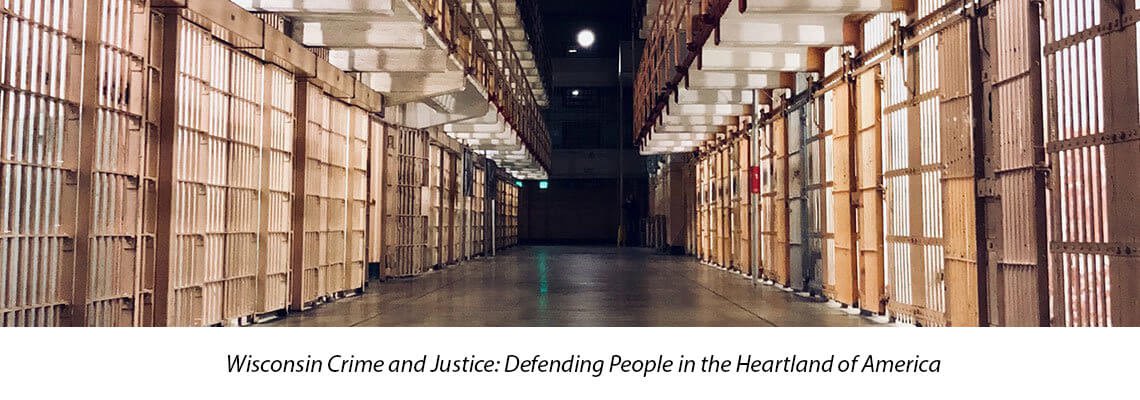
Supporters argued truth-in-sentencing would be cost-neutral. It wasn’t. Corrections spending overtook the entire UW System budget by 2011. Wisconsin now ranks 12th nationally in corrections costs — higher than every Midwest state except Nebraska. Healthcare spending for inmates has nearly tripled since 2005, driven by an aging prison population that is a direct consequence of mandatory long sentences. The state opened a $7 million assisted-living unit inside a correctional facility in 2023 to care for elderly inmates — people who studies consistently show are among the least likely to reoffend after release. As of 2024, Wisconsin’s prisons hold 22,801 people, nearly 32% above their designed capacity. Wisconsin taxpayers are paying more and getting less.
A System That Targets Black and Native Communities
The racial toll of truth-in-sentencing cannot be separated from how the law operates. Wisconsin holds the second-largest gap between Black and white incarceration rates of any state in the country. Black men are 28% more likely than white men to receive a prison sentence for comparable offenses. Because truth-in-sentencing eliminates any back-end correction — no parole board, no early release, no second look — every disparity that enters the system at arrest, charging, or plea bargaining gets locked in and compounded. Meanwhile, Native American prison admission rates have nearly doubled since 2000, a crisis that has received far too little attention from policymakers. Wisconsin built a law with no mercy built in, and the communities with the least power have paid the highest price.
A First Step, But Only a First Step
In April 2026, Governor Evers reinstated Wisconsin’s commutation process for the first time in 25 years, giving some incarcerated people a path to petition for early release. It is a meaningful step and long overdue. But it is also a band-aid on a broken system. Commutations are an executive tool — the next governor can eliminate them with the stroke of a pen. With a November election approaching, that risk is real. As long as truth-in-sentencing remains the law, Wisconsin will keep filling prisons with people who have no reason to change, spending money it doesn’t have, and locking in racial inequities that shame the state. Reform cannot stop at commutations. The law itself must change.
Need Help with a Commutation Application?
Governor Evers’ commutation process offers a real second chance for people who have served their time and demonstrated genuine change. But navigating the application is complex, and having experienced legal counsel matters. Mastantuono Coffee & Thomas SC is available to help individuals and families explore commutation eligibility. Contact MC&T Law to talk about how we can help.
Sources: Wisconsin Policy Forum, Cross Examination (April 2026); Wisconsin Bar Association; Marquette Law Review; Wisconsin Examiner; Isthmus; Wisconsin Watch.